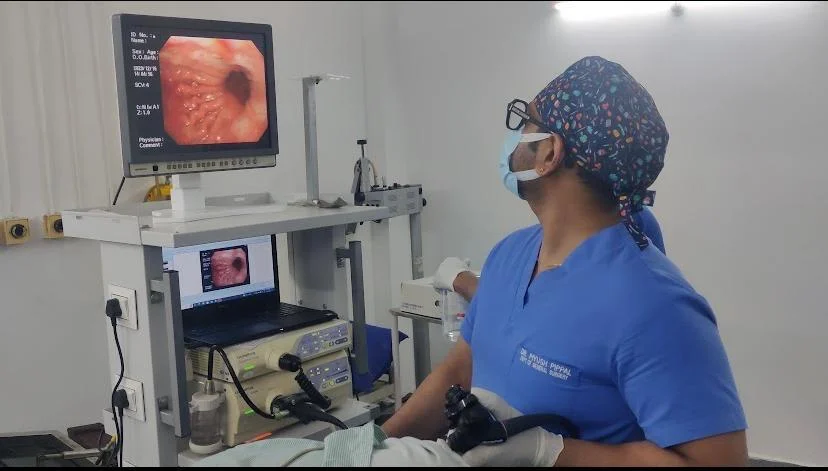
Endoscopic procedures are minimally invasive techniques used to examine the inside of the digestive tract and, when required, perform certain diagnostic or therapeutic procedures. An endoscope is a flexible tube equipped with a camera and light that allows the doctor to view internal structures without making large surgical incisions.
Dr. Piyush Pippal provides evaluation and appropriate endoscopic care for patients seeking an endoscopic procedure in Paschim Vihar. The recommended procedure depends on the patient's symptoms, medical history and suspected gastrointestinal condition.
An endoscopic procedure allows a doctor to examine parts of the gastrointestinal tract using a specialized camera. Depending on the type of endoscopy, the instrument may be introduced through the mouth or through the rectum.
Endoscopy can help identify abnormalities such as inflammation, ulcers, bleeding, polyps and other changes in the digestive tract. In selected situations, the doctor can also take tissue samples or perform certain treatments during the same procedure.
Different endoscopic procedures are used to examine different parts of the digestive system.
Common types include:
The appropriate procedure depends on the symptoms and area requiring evaluation.
Patients seeking an endoscopic procedure in Paschim Vihar undergo an assessment before the procedure is recommended. Dr. Piyush Pippal reviews symptoms, medical history and previous diagnostic reports to determine whether endoscopy may be useful.
Endoscopy can provide direct visualization of the digestive tract and may help identify the cause of symptoms that cannot be adequately explained through routine examinations.
If a biopsy or other intervention is required, the doctor can discuss the procedure and preparation beforehand.
An endoscopic examination may be recommended for several digestive symptoms and conditions.
Common reasons include:
Endoscopy is not required for every digestive symptom. The decision depends on the patient's clinical presentation.
One of the major uses of endoscopy is direct examination of the gastrointestinal tract. The camera provides a detailed view of the lining of the digestive system.
The procedure can help identify:
If an unusual area is identified, a small tissue sample may be taken for laboratory examination.
A biopsy involves removing a small sample of tissue for microscopic examination. During an endoscopic procedure, tissue samples can often be collected without requiring a separate surgical incision.
A biopsy may be recommended when the doctor needs to determine the nature of an abnormal area, investigate inflammation or evaluate other gastrointestinal changes.
Having a biopsy taken does not by itself mean that cancer is present. It is a diagnostic method used to establish the nature of tissue changes.
Endoscopy is not limited to diagnosis. Certain endoscopic procedures can also be used for treatment.
Depending on the type of procedure and the condition being treated, endoscopic intervention may help with:
The availability and suitability of therapeutic procedures depend on the individual case.
Preparation varies according to the type of endoscopy.
For an upper GI endoscopy, patients are generally instructed to fast for a specified period before the procedure. Colonoscopy requires bowel preparation so that the colon can be examined clearly.
Patients should follow the instructions provided by their doctor regarding food, fluids and medications before the procedure.
Inform your medical team about all medicines you take, particularly blood-thinning medicines and medications for chronic conditions.
The exact experience depends on the type of endoscopy. An upper GI endoscopy involves passing the endoscope through the mouth into the digestive tract. During colonoscopy, the endoscope is introduced through the rectum to examine the colon.
Sedation or other forms of comfort medication may be used depending on the procedure and clinical requirements.
The camera transmits images to a monitor, allowing the doctor to examine the gastrointestinal lining and perform necessary diagnostic or therapeutic steps.
Recovery depends on the procedure and whether sedation or an intervention was used. Patients who receive sedation may need someone to accompany them home and should follow instructions regarding driving and other activities.
Temporary throat discomfort, bloating or mild abdominal discomfort can occur after certain procedures.
Your doctor will explain when you can resume normal food, medicines and activities and when follow-up may be required.
Endoscopic procedures are commonly performed diagnostic and therapeutic techniques. However, as with any medical procedure, potential risks exist.
Depending on the procedure, complications can include bleeding, infection, reactions to sedation or, rarely, injury to the digestive tract.
The potential risks depend on the specific endoscopic examination and any treatment performed during it. Your doctor will explain the relevant risks before the procedure.
Persistent digestive symptoms may have several possible causes. Endoscopy can provide valuable information when direct examination of the gastrointestinal tract is required.
Dr. Piyush Pippal evaluates patients based on their symptoms, medical history and diagnostic requirements before recommending an appropriate endoscopic procedure.
Patients can discuss the purpose of the examination, preparation, procedure and expected recovery during consultation. This helps ensure that the recommended investigation is relevant to the patient's condition.
An endoscopic procedure uses a flexible instrument with a camera to examine the inside of the digestive tract. Certain endoscopic procedures can also be used for biopsies or selected treatments.
The experience varies depending on the type of endoscopy. Sedation or other comfort measures may be used for certain procedures to improve patient comfort.
Endoscopy may be recommended for symptoms such as persistent digestive discomfort, difficulty swallowing, gastrointestinal bleeding, unexplained anaemia or suspected ulcers and inflammation.
Yes. If an abnormal area is identified, a small tissue sample can often be collected during the same procedure and sent for laboratory examination.
Preparation depends on the type of endoscopy. Upper GI endoscopy generally requires fasting, while colonoscopy requires bowel preparation. Follow the specific instructions provided by your doctor.
Recovery varies depending on the procedure and whether sedation was used. Many patients can resume routine activities relatively soon, but those receiving sedation may need temporary restrictions.


Write a Reply or Comment